
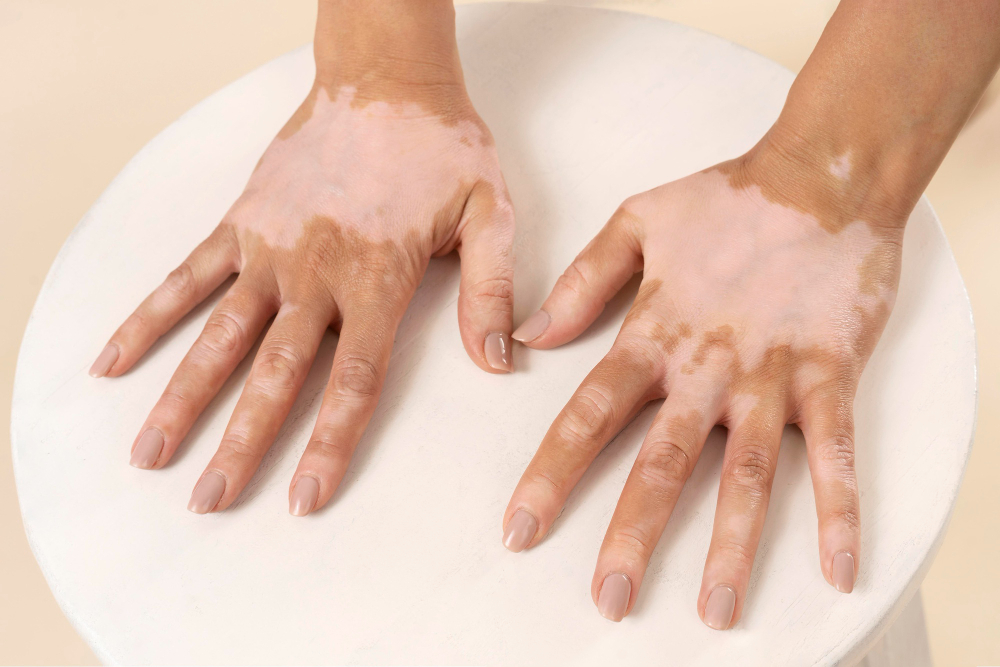
What is Vitiligo?
Vitiligo is a skin condition that causes patches of skin to lose their color. These patches can appear anywhere on the body. The skin turns lighter or white because the cells that make pigment are destroyed. While vitiligo is not dangerous, it can affect how people feel about their appearance. Understanding the types of vitiligo helps people recognize symptoms and seek the right care.
Causes and Risk Factors
Although the exact cause of vitiligo is not fully known, experts believe it is an autoimmune condition. This means the body’s immune system attacks its own pigment cells. Several factors may increase the risk of developing vitiligo:
However, not everyone with these risk factors will develop vitiligo.
Main Types of Vitiligo
There are several types of vitiligo. Each type affects the skin in different ways. Knowing the type can help with vitiligo diagnosis and treatment options.
How to Identify Different Types
Recognizing the type of vitiligo can help guide treatment. For instance, non-segmental vitiligo often shows up as matching patches on both sides of the body. In contrast, segmental vitiligo usually affects just one area. Focal vitiligo stays in a small region and does not spread much. Universal vitiligo is easy to spot because it covers nearly all the skin. Acrofacial vitiligo mainly affects the face and tips of fingers or toes. If you notice new or spreading white patches, it is important to track their location and pattern.
Diagnosis and When to See a Doctor
If you see white patches on your skin, you should visit a doctor. Early diagnosis helps with better management. Doctors usually:
In some cases, a small skin sample may be taken for testing. If you notice rapid changes or feel worried, do not wait to seek help.
Treatment Options
While there is no cure for vitiligo, several vitiligo treatment options can help restore skin color or slow the spread. Treatment depends on the type and how much skin is affected. Common options include:
Not every treatment works for everyone. Therefore, it is important to talk with a doctor about the best plan for you.
Living with Vitiligo: Lifestyle Tips and Support
Living with vitiligo can be challenging, but support and good habits can help. Here are some tips:
Many people with vitiligo lead healthy, active lives. With support, you can manage both the physical and emotional effects.
Prevention and Myths
Currently, there is no known way to prevent vitiligo. However, early care may help slow its spread. Some common myths include:
Understanding the facts can help reduce fear and stigma.
Consult a healthcare professional for personalized advice about vitiligo.